
When you watch a modern strongman hoist a 500kg deadlift or carry a refrigerator the length of a football field, it is natural to ask a certain question. However, the more interesting conversation isn’t about what these athletes put into their bodies—it is about what they put into their lives.
At the elite level of strongman, the sport is untested. Because of this, the playing field is generally considered even. If one athlete utilizes every tool available to recover, it is safe to assume his competitors do the same. But here is the critical point that often gets lost in the debate: That does not take anything away from the achievement.
The Real Secret: Work, Guts, and Genetics
Let’s be very clear about what actually creates a world-class strongman. These men are not made by a single decision or a single substance. They are made by years of brutal, soul-crushing consistency.
Consider the following factors that truly separate the champions from everyone else:
-
Insane Training Volume: We are talking about lifting near-maximum weights, day after day, for years. The human body naturally resists this. It takes a unique kind of madness to push through pain barriers that would make most people quit.
-
Freakish Genetics: You cannot train to be 6’9″ with the bone density of a forklift. These athletes are genetic outliers—the top 0.1% of the population who were built specifically for leverage and power.
-
The “Eating” Discipline: If you think training is hard, try eating 10,000 calories of clean food every single day. Strongmen often describe eating as “the second job.” It is a grueling, uncomfortable, hourly effort to fuel a massive frame.
Steroids vs. Bodybuilding: A Key Difference
It is a common mistake to lump strongmen in with professional bodybuilders. While both sports may involve similar tools, the importance of those tools is completely different.
In bodybuilding, the look is everything. The sport is judged purely on aesthetics. In strongman, the look doesn’t matter at all—only the result on the platform matters.
Steroids are a small part of a strongman’s life. Their primary purpose is not to build the muscle (the heavy lifting does that) but to allow the athlete to recover from endless training sessions and try to stay free from injuries. It is a repair tool, not a magic wand.
The Bottom Line: The Pill Doesn’t Lift the Bar
Here is the ultimate truth that cuts through all the noise: You can take all the supplements in the world, and you still won’t be able to deadlift 500kg.
There is no chemical reaction that teaches proper bracing technique. There is no injection that builds the mental fortitude required to hold a 400kg yoke on your back while your vision goes black. The weights do not lie.
The Modern Icon: Hafthor Bjornsson
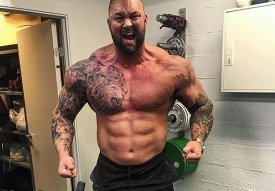
Take the example of Hafthor Bjornsson (famous for his role as The Mountain in Game of Thrones). He is the result of a perfect storm of factors. Yes, he utilized the tools common to the sport. But he is also the result of insane genetics, insane eating, and a work ethic that borders on obsessive compulsion.
These men are unbelievable athletes. Their strength is real. Their commitment is real. And the show they put on for fans is a testament to the limits of human potential. The “extras” are simply a footnote in a much larger story of sacrifice, sweat, and steel.

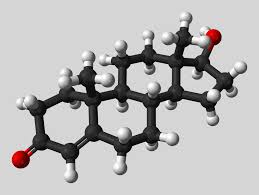 Many men look for simple ways to support healthy testosterone levels, especially as they age or notice changes in energy, mood, or gym performance.
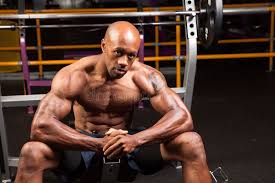 Muscle and Testosterone: The Balance Between Building and Overtraining